Showing posts with label stimulus. Show all posts

Tuesday, December 23, 2008

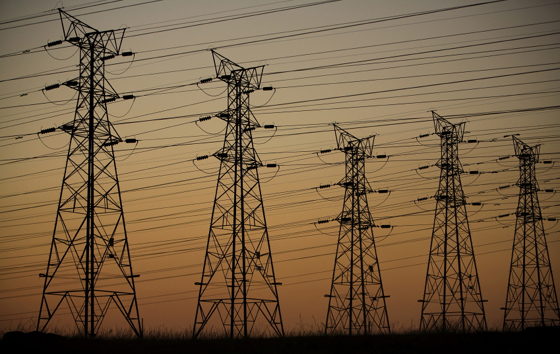
The Smart Grid At Any Cost?

How much should the U.S. government invest in smart grid technology?

The government really doesn’t have unlimited resources, despite talk of a stimulus package that could reach $1 trillion. So, should technologies like the smart grid be built regardless of cost?

Adam Stein, emissions reduction project manager and co-founder of the voluntary carbon offset provider TerraPass, posted the following response under the heading “The Wrong Question” to a blog on Grist.org, an environmental news and commentary site:
"Things that are worth funding are worth funding, regardless of funding source. The question is: should we build a smart grid given a cost of X? Not: should we build a smart grid provided we can find a source of thematically linked revenue?

"A spending program either makes sense or it doesn't, given everything we know about society's level of wealth, competing priorities, expected costs, and expected benefits. If the program doesn't pencil out, it doesn't make sense to do regardless of whether the cash is on hand. And if it does pencil out, then let the appropriation process sort itself out as it normally does. ...

... "It isn't the job of policy advocates to balance the federal budget."

Tuesday, December 2, 2008

Stimulis Could Provide
$50 Billion for Green Projects

As part of its economic stimulus package, the Obama administration may earmark $50 billion to fund environmentally sound infrastructure projects, according to a key economic advisor.

Obama adviser and Economic Policy Institute economist Jared Bernstein (left) along with other economists see the money funding at least $50 billion in environmentally sound infrastructure projects that could be up and running within a few months, according to a posting on Bloomberg.com.

Among the steps along the “green path,” Bernstein said, could be a requirement that repairs made to public buildings be environmentally friendly.

According to Bloomberg:
A critical mass of support for clean-energy spending and green-collar-job creation is building among environmentalists, labor groups, local governments and companies such as Google Inc. and American Electric Power Co., the biggest U.S. producer of electricity from coal.

The loosely knit coalition is advocating for what (Obama transition team advisor Bracken) Hendricks calls a “green recovery” stimulus that would create jobs with an eye toward conserving resources and reducing reliance on fossil fuels such as coal and oil.
Google backs long-term tax rebates for renewable energy plus a federal investment in electric smart-grid technology to cut energy use by developing two-way communications between utilities and their customers. Again Bloomberg:
Both provisions would create high-technology jobs, said Harry Wingo, energy policy counsel for Google, which has been meeting with Obama advisers and Capitol Hill lawmakers.

Green-jobs provisions “are going to lead to more job creation here and put us in a better spot to compete for the global market in clean energy,” Wingo said.
And, no doubt, among those new jobs will be some for IT pros to make the smart-grid, well, smart.

Monday, November 24, 2008

Big Pay Cut for Some Going Green

The press is buzzing with President-elect Barack Obama’s proposed stimulus package to create 2.5 million jobs over two years. Among the jobs most often mentioned is the insulation installer, who’ll help make homes and other buildings more energy efficient. At the same time, we're inundated with stories of the potential bankruptcy of one or more of the Big 3 automakers that could results in tens of thousands of assembly workers losing their jobs.

How much pay would the average autoworker lose if he or she became an insulation installer? A lot. The insulation installer earns about 75% of what an autoworker makes.

According to the Bureau of Labor Statistics, based on May 2007 figures, the mean salary of an assembler at a motor-vehicle manufacturer was $20.28 an hour or $42,190 a year. For an insulation installer: $15.04 an hour or $31,280 annually. But the gap between the two occupations is likely greater, considering that the autoworkers whose jobs are threatened work in unionized shops, where the salaries are about $28 an hour, according to an analysis conducted by Jonathan Cohn, published on The New Republic's website.

Of course, most of these new installers won’t be former autoworkers. Still, what these numbers show is that some green occupations will not offer salaries anywhere near as high of those paid by old-line manufacturers. But that’s not news, is it? And, the government projects growth in insulation installation jobs by 2016 but not those on America's assembly lines.

Here's what the BLS said about employment growth for insulation workers in the 2008-2009 edition of its Occupation Outlook Handbook, published before the need for a new stimulus package was imagined:
Employment of insulation workers is expected to increase 8 percent during the 2006-16 decade, about as fast as the average for all occupations. Demand for insulation workers will be spurred by the continuing need for energy efficient buildings and power plant construction, both of which will generate work in existing structures and new construction.
BLS wasn't optimistic about assembly line workers (it didn't provide specific numbers on autoworkers):
Employment of assemblers and fabricators is expected to decline slowly by 4% between 2006 and 2016. Within the manufacturing sector, employment of assemblers and fabricators will be determined largely by the growth or decline in the production of certain manufactured goods.